Sealcoating & Crack Filling in Louisville
In this climate sealcoating is not cosmetic. It is what keeps water out of your pavement before the winter freeze-thaw cycle can get into it and start prying it apart.
The mechanism, because it explains the whole service
Water gets into asphalt through cracks and through a surface that has oxidised porous. When the temperature falls below freezing that water expands by about nine percent. It has nowhere to go but outward, so it pushes the pavement apart, widening whatever gap it was sitting in. When it thaws, the wider gap takes on more water than before, and the next freeze pushes harder.
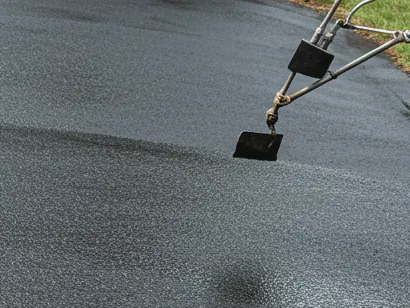
Louisville does not freeze once in December and stay frozen. It crosses the freezing point back and forth all winter, dozens of times. That is dozens of cycles a year, each one slightly worse than the last, and it is why a crack you could barely see in October is a hole you can put a fist in by April.
Sealcoat closes the surface. Crack filling closes the gaps too wide for sealer to bridge. Together they remove the water's way in, which is the only thing that actually stops the cycle.
Do the cracks first
This is the part that gets skipped, and skipping it wastes the sealcoat. Sealer is a thin surface coating. It will bridge hairlines, but anything wider needs filling with a proper crack sealant before the sealer goes on. Seal over an open crack and you have painted over the exact hole you were trying to close.
So the order is: clean the surface, fill the cracks, patch any potholes, then seal. If someone quotes you sealcoating without mentioning crack filling on a surface that visibly has cracks, that is worth asking about.
Autumn is the right time, and that is not a sales line
Sealer needs warm, dry conditions to cure properly, so the season runs roughly late spring to early autumn. Within that window, later is better, because the entire purpose is to have the surface closed before the first hard freeze rather than repairing after it.
Sealing in April protects you too, but it means the coating has taken a full summer of traffic and UV before it faces the winter it was bought for. Sealing in September or early October puts it at full strength going into the months that matter.
How often
Every two to three years for most driveways and lots. High-traffic commercial pavement and anything that takes heavy winter salting sits at the shorter end. It is tempting to stretch the interval when the surface still looks acceptable, but the coating is doing its work invisibly and the cost of falling behind is not another sealcoat, it is resurfacing.
One exception: new asphalt should not be sealed straight away. Give it about a year to cure and release its lighter oils first. Sealing new pavement too early traps them and leaves you with a soft surface.
What sealcoating will not do
- It is not structural. If the base beneath has failed, sealer changes nothing. That is a replacement conversation.
- It will not fix potholes. Those get cut out and patched properly first.
- It will not fix drainage. If water stands on the surface after rain, sealing it does not stop the water sitting there.
- It is not a substitute for crack filling. See above.
Most surfaces take foot traffic within a few hours and vehicles after 24 to 48 hours, depending on temperature and humidity on the day. If the lot is being striped as well, that goes on once the sealer has cured, and the fresh dark surface is the best base for paint you will get.