Asphalt Resurfacing & Overlays in Louisville
A new surface over a base that is still sound. Far cheaper than replacement, and the right answer more often than people expect, but only when the ground underneath has held.
What an overlay actually is
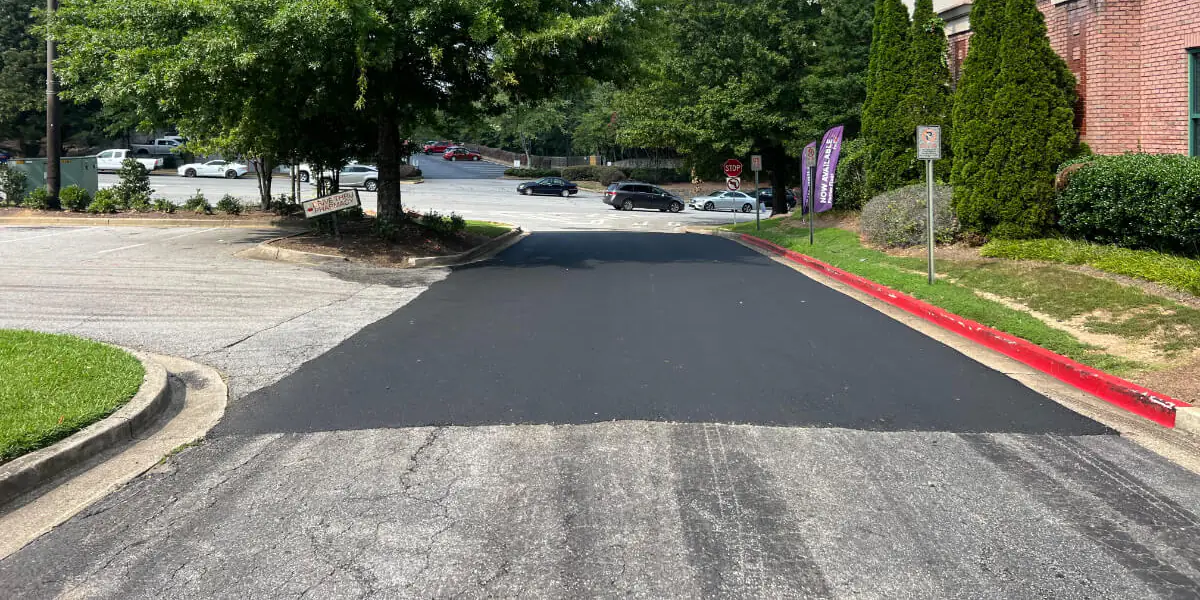
An overlay is a fresh layer of asphalt placed over your existing pavement. The old surface stays where it is and becomes part of the structure. Because you are not excavating, hauling away, and rebuilding the base, it costs a fraction of a full replacement and takes a fraction of the time.
That is the whole appeal, and it is a genuinely good deal, provided the base underneath is intact. An overlay adds no structural strength to what is below it. If the base has failed, the new surface will crack in exactly the same places within a couple of seasons, because the thing that was moving is still moving.
How we decide
This is the judgement that matters, so here is what we are actually looking at.
| What we find | Verdict |
|---|---|
| Straight cracks, isolated, base feels solid underfoot | Overlay is a good fit |
| Surface rough and oxidised but sitting flat and true | Overlay is a good fit |
| Interconnected cracking in polygons (alligator pattern) | Base has failed. Overlay will not hold |
| Areas that flex or move under a loaded vehicle | Base has failed. Overlay will not hold |
| Standing water after rain, low spots holding | Fix drainage first, or the overlay repeats the failure |
| Failure limited to a few defined areas | Full-depth patch those, then overlay the rest |
That last row is the useful middle ground, and it is common. A lot does not have to be all sound or all failed. We cut out and rebuild the sections that have gone, then overlay the whole surface so it finishes as one consistent pavement.
The height problem, and milling
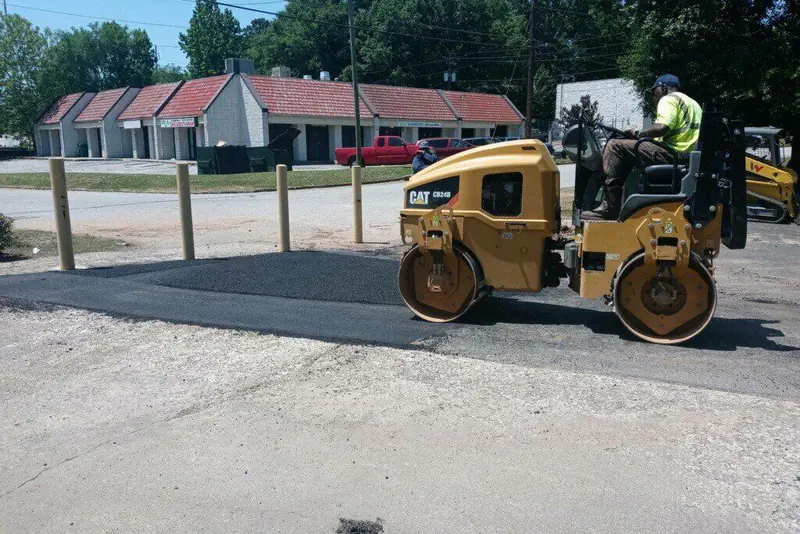
An overlay adds roughly an inch and a half to two inches of height. Most of the time that is fine. Sometimes it is not: at a garage threshold, against a kerb, at a drain inlet, where a sidewalk meets, or anywhere a door has to clear the surface.
Where height cannot move, we mill first: grind off the equivalent depth of old surface, then place the new layer so the finished level is unchanged. That is standard on commercial lots where drains and kerbs fix the geometry, and it is why "mill and fill" comes up more on parking lots than driveways.
What you get out of it
A resurfaced driveway or lot typically runs eight to fifteen years. The spread is wide because it depends almost entirely on two things: how sound the base was when we started, and whether the surface gets sealed and its cracks filled on a regular cycle afterwards. Sealed on schedule, expect the top of that range. Left alone through Kentucky winters, expect the bottom.
If the base has genuinely failed, do not let anyone sell you an overlay. The honest answer there is tear-out and replacement, and it is cheaper than paying for an overlay and then replacing anyway.