Parking Lot Striping in Louisville
Restriping, new layouts, ADA-compliant accessible stalls, fire lanes and directional markings. All laid out to get the most legal capacity from the asphalt you already have.
Striping is the cheapest thing that changes how a property reads
Pavement can be structurally fine and still make a business look neglected, and faded striping is usually why. It is also the least expensive work on this site by a wide margin, which makes it the highest-return line item most property managers put off.
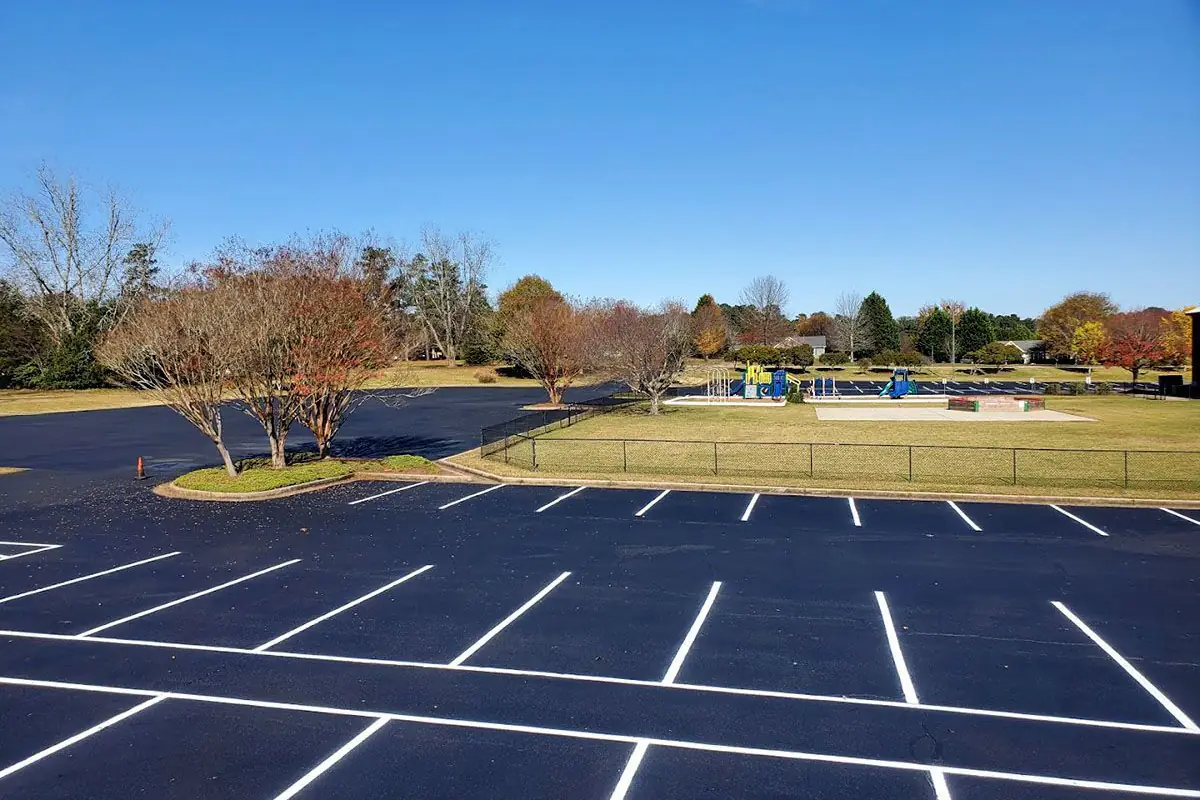
Around here it fades faster than the national average for one specific reason: winter salt and plough blades. Salt is abrasive and chemically aggressive, and a plough edge scrapes paint directly off the surface. A lot that would hold its lines for three years in a mild climate often needs attention after two winters.
The ADA sets out how many accessible spaces a lot needs based on its total count, how wide the stall and its access aisle must be, how many of those must be van-accessible, and what signage and markings go with them. It is a specification, not a preference, and getting it wrong is where complaints and legal exposure start.
We lay accessible stalls, access aisles, van-accessible spaces, ground symbols and signage to meet those requirements for your lot's size. When we restripe an older lot we check what is there against the current requirement, because lots striped decades ago frequently do not meet it, and simply repainting the existing lines carries that problem forward.
Fire lanes are the other one people repaint without checking. Local fire marshal requirements govern where they run and how they are marked, and they are worth confirming rather than assuming the old layout was right.
Restripe the same layout, or redesign it?
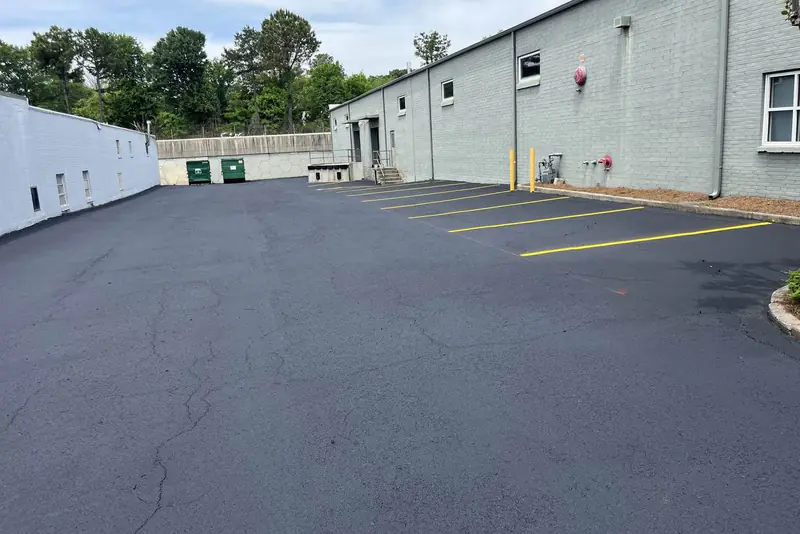
Most people call for a restripe and get exactly what was there before. That is sometimes correct and often a missed opportunity, because the moment a lot is bare is the only cheap moment to change it.
| Worth reconsidering | Why |
|---|---|
| Stall angle | Angled parking often fits more cars and is easier to enter, depending on lane width |
| Stall count | Older lots were frequently laid out generously; you may gain spaces within code |
| Accessible provision | Requirements may have changed since the lot was last laid out |
| Traffic flow | One-way circulation and clear arrows reduce conflicts at entrances |
| Loading and pickup | Curbside collection changed how many businesses use their frontage |
| Where you want people to walk | Marked crossings guide pedestrians away from the busiest lanes |
None of that costs meaningfully more than repainting the old lines, because the labour is in the layout and the application either way.
Timing it with other work
If the lot is also getting sealcoated, stripe immediately afterwards once the sealer has cured. Fresh sealcoat gives you clean, dark asphalt for the paint to bond to, the contrast is at its sharpest, and the lines last longer than they would on a weathered surface. Doing it the other way round means painting lines you are about to cover.
Same principle after resurfacing or new paving. The lot cannot go back into service until it is marked, so we schedule striping as the closing step rather than a separate visit.