Parking Lot Paving in Louisville
Commercial lots, warehouse yards and dock aprons built for the axle loads they actually carry, phased so the property keeps operating while we work.
A parking lot is not one pavement
The single most common mistake on commercial asphalt is building the whole lot to the same specification. It is not loaded the same way. A parking stall carries a car sitting still. An entrance carries every vehicle that enters, turning, braking and accelerating. A dock apron carries a loaded tractor-trailer pivoting on its drive axles in the same square yard, thousands of times a year.
Build all of it to stall specification and the stalls will be fine while the drive lanes rut and the apron shoves into waves. Build all of it to apron specification and you have spent a great deal of money paving parking spaces for sedans. We section the lot by what actually uses each part of it.
| Zone | What it carries | What it needs |
|---|---|---|
| Parking stalls | Static car loads | Standard section, drainage that works |
| Drive lanes | Constant turning traffic, delivery vans | Thicker section, sound base |
| Entrances & approaches | Every vehicle, braking and turning | Heavy section, often the first place to fail |
| Dock aprons & truck courts | Loaded trailers pivoting in place | Heaviest section, or concrete at the pivot point |
| Dumpster pads | Front-loader landing repeatedly on one spot | Concrete. Asphalt will not hold here. |
That last row is worth saying plainly: we will recommend concrete for a dumpster pad even though we lay asphalt, because an asphalt pad under a refuse truck will deform and you will be paying us again inside two years.
If a lot develops holes in the same three places every year, the surface is not the problem and patching it again will not help. Something is holding water there.
It is usually one of a short list: a low spot where the grade lost its fall, a blocked or undersized drain, a downspout discharging straight onto the pavement, or a section where the base was never adequate and has settled. Water sits, works into the base, and then the winter freeze-thaw cycle breaks the base down from below. Come spring the surface collapses into the void.
Fixing that means regrading to a real outlet or repairing the drainage, not laying more asphalt on top. It costs more the first time and stops the annual bill.
Working around your operation
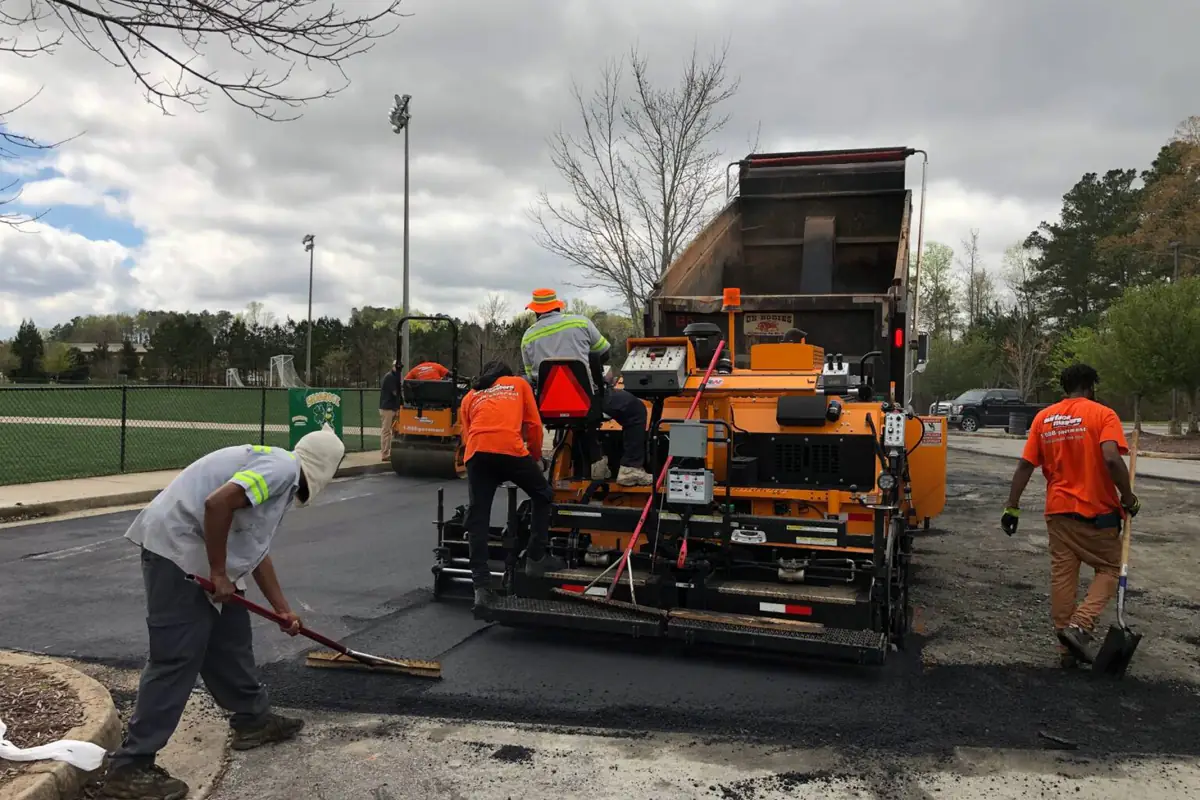
Very few commercial properties can close for a week, and we do not ask them to. Most lots get done in phases: we take a section, complete it through to a surface you can drive on, then move to the next while the first cures. Retail and restaurants often get worked at night or on their slowest day. Distribution and warehouse work gets sequenced around shipping windows so docks stay live.
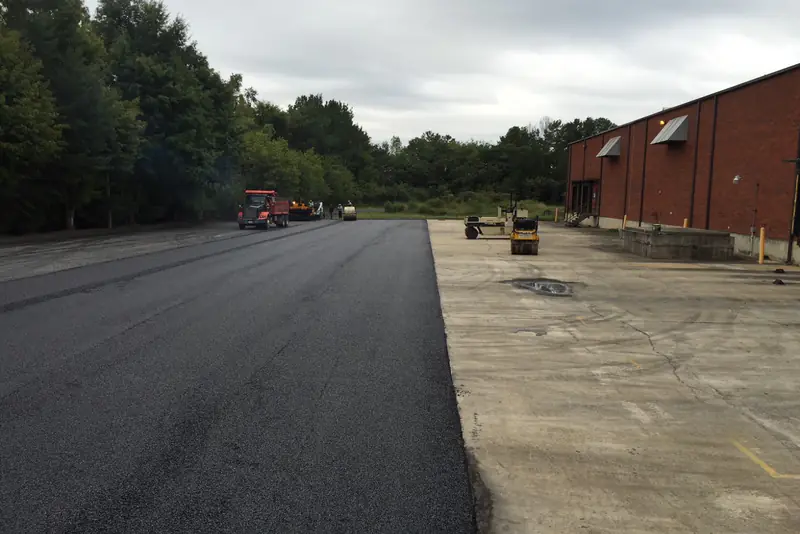
What we need from you early is the honest traffic picture: when you are busiest, which doors cannot be blocked, when trucks arrive. That shapes the sequence, and it is much cheaper to plan around than to discover midway.
New build, overlay, or repair
- New construction. Full build from sub-grade up, sectioned by load as above, with drainage designed rather than inherited.
- Overlay. Where the base is sound and the surface is spent, a new layer restores the lot for far less. See resurfacing.
- Mill and fill. Where height at kerbs, drains or thresholds cannot change, we grind the old surface off and replace it at the same level.
- Targeted repair. Full-depth patches where specific areas have failed, leaving sound pavement alone.
Once the asphalt is down the lot needs striping before it goes back into service, and that is the moment to reconsider the layout rather than simply repainting what was there.