Driveway Paving in Louisville
New asphalt driveways and full replacements, built on a base deep enough for clay soil and graded so water leaves before it can freeze in a crack.
The job happens before the asphalt arrives
A driveway is two things: a wearing surface you can see, and a compacted stone base you cannot. Nearly every driveway we are called out to replace early failed in the part nobody looked at. The asphalt on top was fine. What gave way was thin base, poor compaction, or water that had nowhere to drain.
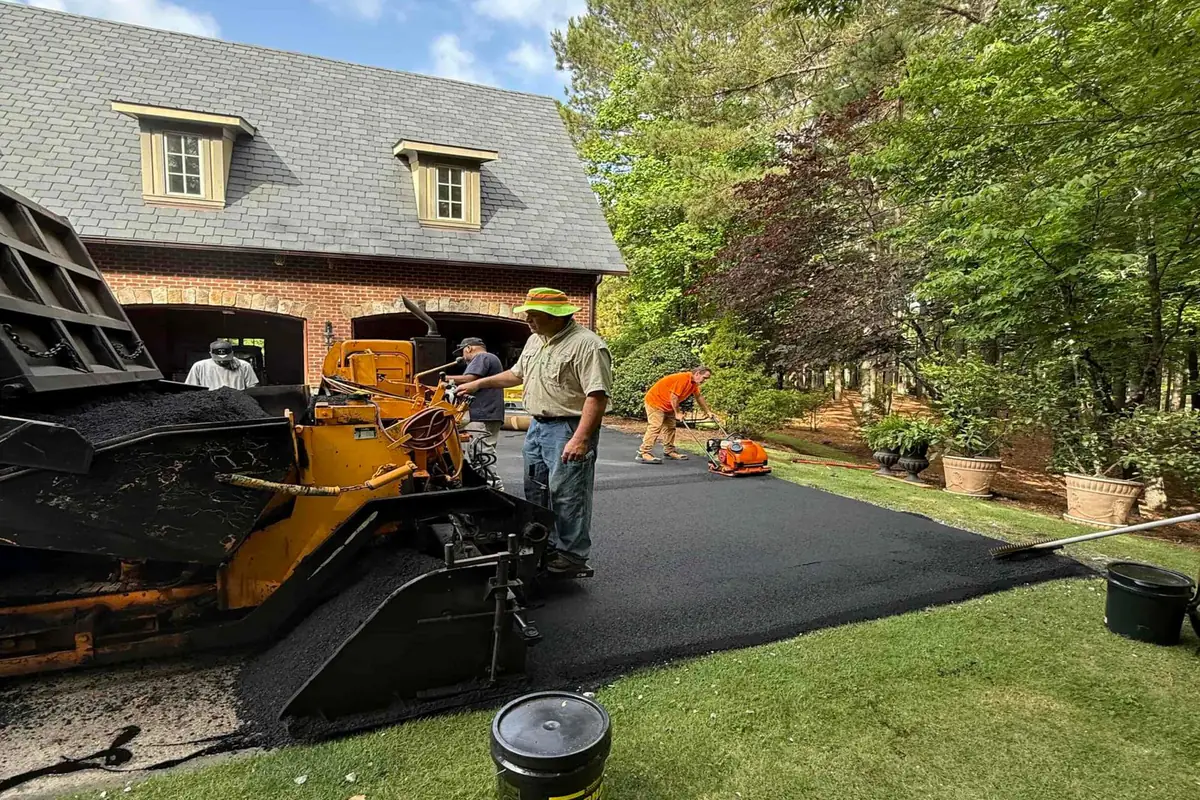
So the sequence matters more than the specification. We strip out the old surface and any failed material beneath it, cut the sub-grade to the depth the soil requires, and compact it. Then we place and compact aggregate base, checking the fall as we go so the finished surface will actually shed water. Only then does asphalt go down, in lifts, each one compacted while it is still hot enough to knit.
Why clay changes the numbers
A driveway on well-drained sandy ground can get away with a modest base. Much of Jefferson and Bullitt County is not that. Heavy clay holds water instead of letting it through, and clay that is holding water loses its bearing strength. The base above it then flexes every time a vehicle rolls over it, and asphalt that flexes repeatedly cracks.
That means base depth here is not a place to economise. When a quote comes in far below everyone else's, the base is usually where the difference went, and you will not find out for three or four winters.
New install, or tear out and replace?
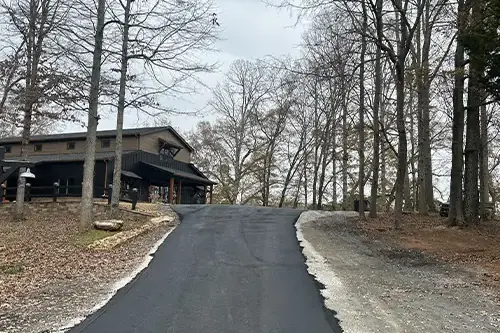
If there is no driveway there now, it is a new install and the whole build is fresh. If there is one and it has failed, the question is whether the base underneath can be kept.
The tell is the crack pattern. Isolated straight cracks usually mean surface aging, and that is a sealcoating or resurfacing conversation. Cracking in interconnected polygons, like alligator hide, means the base below has lost support and is moving. No surface treatment fixes that. It comes out and gets rebuilt.
What it looks like on the day
| Stage | What happens |
|---|---|
| 1. Strip | Old surface and failed material removed and hauled off |
| 2. Sub-grade | Cut to depth, graded for fall, compacted |
| 3. Base | Aggregate placed and compacted, fall checked again |
| 4. Asphalt | Hot mix placed in lifts, compacted hot, edges hand-finished |
| 5. Walk it | We go over the finished surface with you before we leave |
A standard residential driveway is a one-day job. You can usually walk on it within a few hours and drive on it after 24 to 48 hours, though we will give you a specific time on the day since fresh asphalt stays soft longer in hot weather.
Things worth deciding before we start
- Where the water goes. If the drive slopes toward the garage rather than away, that gets designed out now, not lived with.
- Edges. An unsupported asphalt edge crumbles over time. We can build a proper edge or a concrete ribbon where the layout calls for it.
- Width and turning. Adding a foot of width or a turnaround costs far less now than as a second job later.
- Height at transitions. Garage thresholds, sidewalks and the street connection all have to finish flush.
Then leave it alone for a year
New asphalt should not be sealed immediately. It needs time to cure and release its lighter oils, and sealing too early traps them and gives you a soft surface. Roughly a year, then start the sealcoat cycle and stay on it. That cycle is what takes a driveway from twelve years to twenty.